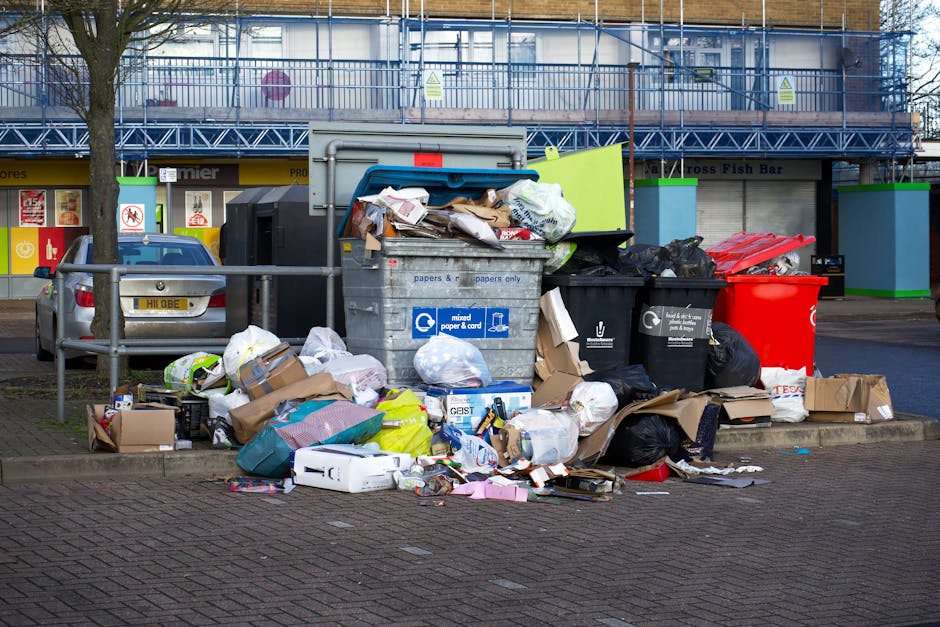
West Ham Park rubbish removal guide for households
If you live near West Ham Park and the rubbish is starting to take over a spare room, a hallway, or that awkward corner in the kitchen, you are not alone. Households build up waste in odd bursts: a sofa that finally has to go, boxes from a move, a garden clear-out after a damp weekend, or the sort of loft clutter that seems to multiply on its own. This West Ham Park rubbish removal guide for households walks through the practical side of getting rid of domestic waste safely, sensibly, and without turning it into a weekend-long headache.
We will look at what household rubbish removal usually includes, how the process works, when it makes more sense than doing it yourself, and what to watch out for. You will also find a comparison table, a realistic example, a checklist, and a few grounded tips from the sort of situations people actually face. Truth be told, clearing waste is rarely glamorous, but it can feel strangely satisfying when it is done well.
Table of Contents
- Why West Ham Park rubbish removal guide for households Matters
- How West Ham Park rubbish removal guide for households Works
- Key Benefits and Practical Advantages
- Who This Is For and When It Makes Sense
- Step-by-Step Guidance
- Expert Tips for Better Results
- Common Mistakes to Avoid
- Tools, Resources and Recommendations
- Law, Compliance, Standards, or Best Practice
- Options, Methods, or Comparison Table
- Case Study or Real-World Example
- Practical Checklist
- Conclusion
- Frequently Asked Questions
Why West Ham Park rubbish removal guide for households Matters
Household rubbish removal matters because clutter is not just clutter. It can block access, create trip hazards, attract pests, make cleaning harder, and turn simple day-to-day tasks into small annoyances that keep piling up. If you are clearing a home near West Ham Park, you may also be dealing with limited parking, shared entrances, stairwells, or tight front gardens. That changes the whole game.
There is also the emotional side. A house clearance is not always about "junk". Sometimes it is a bereavement, a move, a new baby, a breakup, or finally getting a grip on the garage after years of ignoring it. Those jobs can be physical, yes, but they are often a bit more personal than people admit.
From a practical point of view, a good rubbish removal plan helps you separate what can be reused, what needs specialist handling, and what should go straight for proper disposal. That is where structured services like waste removal and home clearance become useful, especially when the load is too big for normal household bins.
Expert summary: The best household rubbish removal is not simply about lifting items out of the house. It is about sorting, safe handling, legal disposal, and choosing the method that fits your home, your time, and the type of waste involved.
How West Ham Park rubbish removal guide for households Works
Most household rubbish removal jobs follow a similar pattern. First, you identify what needs to go. Then you decide whether the waste is general household rubbish, bulky items, reusable furniture, garden waste, or something more specific like loft contents or garage clutter. After that, the removal team or disposal method is matched to the type and volume of waste.
In a typical household job, the process may include:
- A quick assessment of the items to be removed.
- Separating recyclable, reusable, and general waste where possible.
- Careful removal from inside the property, garden, loft, or outbuilding.
- Loading and transport to an appropriate waste transfer or disposal route.
- Any final sweep-up or tidying of the cleared area.
If you are clearing bulky household items, it can help to think beyond "rubbish". Sofas, wardrobes, beds, white goods, broken shelving, old toys, carpet offcuts, and mixed loft clutter all behave differently. For example, a damp cardboard pile in a loft is one thing; a heavy chest of drawers down a narrow stairwell is another entirely. Not the same job. Not even close.
For items like worn-out furniture or a single oversized piece, it may be more sensible to look at furniture disposal or furniture clearance. If the mess has spread across multiple rooms, house clearance may be the cleaner fit.
Key Benefits and Practical Advantages
The obvious benefit is time saved. The less obvious one is energy saved, and that matters more than people think. A clear plan can prevent the half-started "we'll do it this Saturday" scenario that drags into Sunday evening with black bags everywhere and nobody feeling particularly heroic.
- Faster turnaround: A focused rubbish removal visit can clear more in one go than several small trips to the tip.
- Less strain: Heavy lifting, awkward stairs, and awkwardly shaped items can be handled more safely.
- Better sorting: Reusable and recyclable materials are easier to separate when the job is planned properly.
- Cleaner finish: Professional household clearance usually leaves the space more usable straight away.
- Less disruption: One organised visit often creates less mess than trying to do it piecemeal over a week.
Another practical advantage is that it keeps waste moving through the right route. That matters if you want to avoid accidental fly-tipping or the frustration of arriving somewhere only to discover the vehicle is too small, the item is too heavy, or the site will not accept mixed loads. Been there, regretted that.
Who This Is For and When It Makes Sense
This guide is for households that need a realistic, no-nonsense way to deal with domestic waste near West Ham Park. That could mean a one-off clear-out or a bigger seasonal reset. It might also mean a situation where the waste is piling up faster than you can handle on your own.
It tends to make sense if you are:
- clearing a flat or house after a move;
- getting rid of broken furniture;
- emptying a loft, garage, or shed;
- sorting garden waste after pruning or landscaping;
- dealing with end-of-tenancy rubbish;
- making space for refurbishment or decorating;
- helping a relative downsize;
- removing mixed household junk that does not fit normal bin collections.
Some people also use household rubbish removal as a reset point. You know the one: you open a cupboard, stare into a tangle of cables, old paint tins, and mystery boxes, and suddenly decide enough is enough. Fair enough, really.
If your issue is a smaller, room-by-room clear-out, services like loft clearance or garage clearance may be more targeted. If the waste is mainly greenery, garden clearance is the closer match.
Step-by-Step Guidance
A tidy rubbish removal job usually starts before anyone lifts a bag. That is the bit people skip, and then wonder why the day feels chaotic. A bit of prep goes a long way.
- Walk through the property. Make a simple list of what needs to go, room by room.
- Separate the obvious categories. Keep furniture, general waste, garden waste, and recyclable materials apart where you can.
- Set aside anything sensitive. Important papers, valuables, medication, and sentimental items should be removed first.
- Flag awkward items. Heavy wardrobes, broken glass, mattresses, and anything with sharp edges need extra care.
- Check access. Measure doorways, note stairs, and think about parking or loading space.
- Decide the method. Self-clearance, skip hire, or a rubbish removal service each suit different jobs.
- Confirm the disposal route. Ask how the waste will be handled, especially if you are mixing materials.
- Prepare the space. Clear a path, protect floors if needed, and keep children and pets away.
- Do a final sweep. Once the waste is gone, check corners, behind doors, and under shelving.
For many households, this is the point where a proper service becomes worth it. If the load is mixed, bulky, and time-sensitive, it is often simpler to use a team that can manage the lifting and the sorting in one visit. You can also look at pricing and quotes early on so there are fewer surprises later.
Expert Tips for Better Results
Here are the small things that make a surprisingly big difference.
- Take photos before you start. It helps you estimate volume and explain the job clearly.
- Be honest about the mess. Underestimating a clear-out nearly always causes stress on the day.
- Keep one "maybe" pile separate. If you are undecided, do not let it slow down the whole job.
- Bundle similar items together. Sorting saves time and usually makes loading easier.
- Think about reuse early. Good-condition furniture or fixtures may need a different route from broken household waste.
- Use labelled bags or boxes. Simple labels like "keep", "recycle", and "remove" stop a lot of faffing about.
A useful rule of thumb: if an item is awkward to carry, awkward to break down, or awkward to dispose of responsibly, it is probably worth planning around rather than improvising. That is especially true in older houses or maisonettes where stair space is tight and the walls are not exactly forgiving.
And one more thing. Try not to leave the final sort until the crew is standing at the door. It sounds obvious, but you would be amazed how often it happens. Human nature, eh?
Common Mistakes to Avoid
Most household rubbish removal problems are avoidable. They come from rushing, guessing, or assuming every item can be treated the same way.
- Mixing all waste together: This makes it harder to recycle and can complicate disposal.
- Ignoring heavy items: Sofas, wardrobes, appliances, and wet garden waste can be much heavier than they look.
- Leaving access issues until the last minute: Narrow hallways, locked gates, and parked cars can slow everything down.
- Forgetting restricted items: Some household materials need special handling, so do not assume.
- Choosing based only on the lowest price: Cheap can become expensive if the service is not right for the load.
- Not reading the small print: Weight limits, item types, and additional charges can matter more than people expect.
A common real-world mistake is booking a service for general waste when the job is mostly furniture or loft contents. That is where a more specific page like flat clearance can help when you are dealing with compact spaces and a mixed set of belongings.
Tools, Resources and Recommendations
You do not need fancy equipment for a household clear-out, but a few basic tools make life much easier. A sturdy marker pen, thick gloves, bin bags, a torch for lofts or cupboards, and a tape measure all earn their keep.
Recommended practical kit for residents:
- heavy-duty sacks or rubble sacks for mixed rubbish;
- packing tape and labels for sorting;
- protective gloves for broken or dusty items;
- a dust mask for lofts, garages, or long-untouched shelves;
- blankets or floor protection if items need moving through living areas;
- a torch for darker corners, because lofts never seem to have enough light.
If you want a more structured approach, the site's recycling and sustainability information is worth considering before anything leaves the house. It is the kind of thing that sounds simple, but it often clarifies what should be kept apart and what can be diverted away from general waste.
For reassurance around standards, you may also want to review the company's insurance and safety and health and safety policy. Those pages are useful when you are letting someone into your home to handle heavy or awkward items.
Law, Compliance, Standards, or Best Practice
Household rubbish removal in the UK should be handled carefully and lawfully. While you do not need to become a waste-law expert, it helps to understand the basics. Waste should be transferred only to appropriate, authorised routes, and you should be cautious about anyone who offers an overly vague answer about where your rubbish ends up.
Best practice usually includes:
- sorting reusable, recyclable, and general waste where practical;
- keeping hazardous or specialist items separate;
- using trained handlers for heavy or awkward lifting;
- confirming that waste is disposed of responsibly;
- keeping clear communication about what is included in the job.
If you are clearing a household after building work, there may be overlap with construction-type waste too. In that case, builders waste clearance is often the better fit than a standard domestic tidy-up.
It is also sensible to read the service pages carefully. The site's terms and conditions and payment and security pages can help you understand how bookings, charges, and service expectations are handled. A little admin now saves a lot of "hang on, I thought that was included" later.
Options, Methods, or Comparison Table
There is no single best way to remove rubbish from a household. The right option depends on volume, urgency, access, and what kind of waste you have. Here is a practical comparison.
| Method | Best for | Advantages | Limitations |
|---|---|---|---|
| Self-clearance | Small loads, easy access, regular trips | Low direct cost, full control | Time-consuming, physically demanding, may need multiple journeys |
| Skip hire | Large volumes of mixed waste where space allows | Handy for ongoing projects, useful for repeated filling | Needs space, may require permits, not ideal for heavy lifting out of the property |
| Rubbish removal service | Bulky household items, mixed loads, urgent clear-outs | Fast, labour included, less hassle | Cost depends on load size and type, access can affect pricing |
| Targeted clearance | Lofts, garages, furniture, gardens, or flats | Focused approach, often more efficient for one space | May not suit whole-house jobs |
For many West Ham Park households, the sweet spot is a service that can handle lifting and sorting in one visit, especially if the property has stairs or shared access. If you are dealing mostly with old chairs, tables, wardrobes, or sofas, furniture clearance is often more practical than trying to force the job into a general waste shape.
Case Study or Real-World Example
Picture a fairly typical Saturday morning near West Ham Park. A family decides to clear a spare room that has become a storage space for a cot, broken shelving, old suitcases, a fan that stopped working two summers ago, and a stack of boxes that somehow survived two moves. The room smells a bit dusty, the window sticks, and the path from the room to the front door is just narrow enough to be annoying.
They start by sorting items into three piles: keep, donate, remove. Within half an hour, they realise the "remove" pile is bigger than expected, and the broken shelving is too awkward to take apart without making a mess. Rather than turning the whole day into a struggle, they book a household clearance service that can remove the bulky items and mixed waste together.
The benefit is not only the physical lifting. It is the breathing room afterward. The room suddenly looks larger, the job stops hanging over them, and they can actually use the space again. That part matters more than people think. A cleared room changes the feel of the whole home.
That same approach works well for larger or more cluttered properties too, where a full or partial house clearance can turn an overwhelming job into something manageable.
Practical Checklist
Use this checklist before arranging household rubbish removal:
- Identify which rooms or areas need clearing.
- Separate furniture, general waste, garden waste, and recyclables.
- Remove valuables, documents, and sentimental items first.
- Check access routes, stairs, and parking space.
- Measure any oversized items if they need to pass through tight spaces.
- Decide whether you need a targeted clearance or a broader waste removal service.
- Confirm whether any items need special handling.
- Take photos for reference if the job is large or mixed.
- Review pricing, payment, and service terms in advance.
- Choose a disposal route that fits the amount of waste and your timetable.
If you are unsure where to begin, start with the easiest visible items first. That quick win often creates momentum. One bag at a time, one corner at a time. It all adds up.
Get a free quote today and see how much you can save.
Conclusion
A good West Ham Park rubbish removal guide for households should make the job feel clearer, not more complicated. The key is to sort early, be realistic about volume, and choose the right method for the type of waste you have. For some homes that means a quick furniture pickup. For others, it means a more complete clearance of lofts, garages, or mixed household clutter.
The best outcome is not just an empty space. It is a home that feels easier to live in. Less pressure. Less clutter. A bit more calm in the room, which, to be fair, is often what people were after in the first place.
Frequently Asked Questions
What does household rubbish removal usually include?
It usually includes general household waste, bulky items, old furniture, bagged clutter, and sometimes mixed loads from lofts, garages, or spare rooms. The exact scope depends on the service and what you are clearing.
Is rubbish removal better than taking everything to the tip myself?
That depends on the amount of waste, your access, and whether you can lift and transport everything safely. For small, light loads, self-clearance can work. For bulky or awkward waste, a removal service is often far less stressful.
Can I mix furniture and general rubbish in one clearance?
Yes, often you can, but it is usually better to separate items where possible. Mixed loads can still be handled, though good sorting helps with reuse and recycling.
How do I know if I need house clearance or waste removal?
If you are clearing multiple rooms, an entire property, or a large amount of mixed items, house clearance is often the better fit. If the job is smaller and mainly focused on rubbish, waste removal may be enough.
What if I only need one room cleared?
Then a focused service such as loft clearance, garage clearance, or flat clearance may suit you better than a whole-house solution.
Do I need to sort everything before the team arrives?
Not always, but some basic sorting helps a lot. At minimum, remove valuables and separate any items you want to keep. If you can group waste into rough categories, that makes the job smoother.
Are there items household rubbish removal teams might not take?
Some items need special handling, so it is best to ask in advance. If you are unsure about a particular item, describe it clearly and do not leave it to guesswork.
How long does a typical household clearance take?
It varies widely depending on the volume, access, and how much sorting is needed. A small load can be quick, while a full property clear-out naturally takes longer.
What should I check before booking?
Check what is included, how pricing works, whether access might affect the job, and how waste is handled after collection. Reading the service terms carefully is always wise.
Is household rubbish removal suitable for flats and shared buildings?
Yes, but access matters more in flats and shared buildings. Narrow stairs, communal hallways, and parking restrictions can affect the job, so it helps to mention these early.
How can I keep costs under control?
Sort the load before collection, keep reusable items separate, be clear about volume, and avoid adding extra waste at the last minute. A clear description usually leads to a clearer quote.
Where can I learn more about the company and service standards?
You can review the company's about us page, along with the policy pages on safety, sustainability, and payment. It is a sensible way to understand how the service is run before you commit.